Understanding the Difference Between Auger Drives and Auger Bits
When someone starts putting together an auger setup, one of the most common points of confusion is the difference between the auger drive and the auger bit. The terms are often used together, but they are not the same thing, and they do not do the same job. Understanding that difference matters because it affects compatibility, performance, cost, and the overall success of the job. For an owner-operator or small business buyer trying to make a smart equipment purchase, knowing what belongs in the setup and what does not can prevent wasted money and unnecessary downtime.
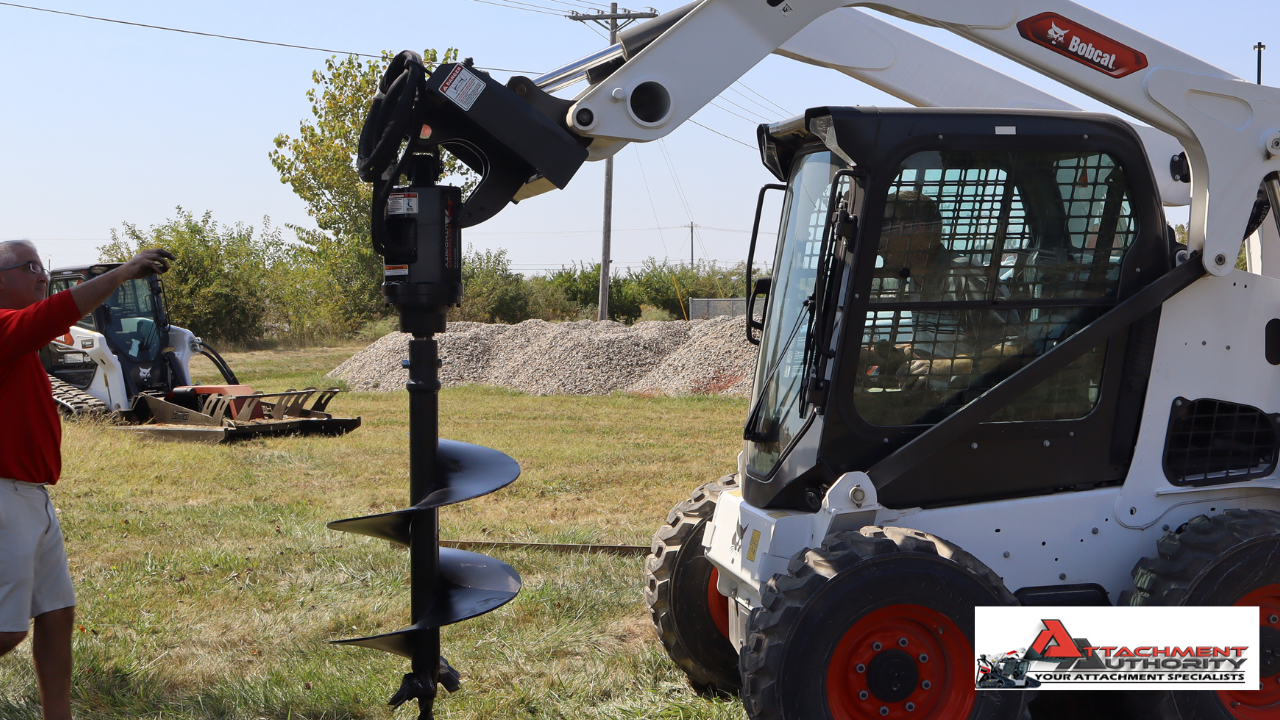
An auger drive is the powered attachment component that uses hydraulic flow and pressure from the machine to create rotational force. That rotational force is what turns the bit and allows the system to drill into the ground. The drive is essentially the power unit of the auger system. It mounts to the machine and connects to the auger bit through the output shaft. Without the drive, there is no torque. Without torque, there is no drilling.
An auger bit is the ground-engaging tool that actually cuts into the soil. It attaches to the auger drive and is responsible for forming the hole. The bit determines the hole diameter, the drilling depth, and the style of cutting action based on the soil or material being drilled. In practical terms, the auger drive provides the power, and the auger bit does the digging. For buyers sorting through bit types and common fit questions, a lot of the same decision points come up in The Complete Pre-Purchase Guide: What to Ask Before Buying an Auger Bit.
Why Buyers Confuse the Two
That distinction is where many buying mistakes start. Some buyers assume the bit is the main purchase and treat the drive like a secondary detail. Others buy a drive and assume it includes everything needed to start drilling. In reality, both parts are necessary, and each one has to be selected based on the machine, the application, and the ground conditions. Buying only one component does not create a working auger setup unless the other component is already owned and fully compatible.
A lot of that confusion shows up when the buyer is focused on hole size but has not yet worked through machine specs, soil conditions, and connection style. Those issues tend to come up early in the buying process, which is why the same themes behind Top 3 Questions to Ask Before Buying an Auger Bit for Your Skid Steer matter here too.
Do You Need Both an Auger Drive and an Auger Bit?
For a buyer starting from scratch, both an auger drive and an auger bit are required. The machine supplies hydraulic power to the drive. The drive converts that hydraulic energy into rotational torque. The bit connects to the drive and uses that torque to cut and lift material out of the hole. If either component is missing, the system does not work.
This is why the question is not whether a buyer needs a drive or a bit. The real question is whether both are needed now, or whether only one component needs to be added to an existing setup. In day-to-day operation, that relationship becomes even clearer, and it lines up closely with what operators run into in How to Use Auger Bits Effectively With Your Skid Steer.
When Only the Bit Needs to Be Replaced or Added
If the buyer already owns an auger drive, then the next purchase may only need to be a compatible auger bit. That is common when expanding into new hole sizes or new job types. A small business owner who already has a properly matched drive may add a smaller dirt bit for fence posts, a larger bit for footings, or a specialty bit for changing ground conditions.
In that situation, the key is making sure the new bit is compatible with the existing drive. Output shaft size, connection style, recommended bit diameter range, and maximum torque limits all matter. A drive can often run multiple bit sizes, but only if those sizes stay within the operating limits of the attachment. Going too large can slow production, overload the system, or shorten component life. That is also where the buying framework in The Complete Pre-Purchase Guide: What to Ask Before Buying an Auger Bit becomes useful, because it helps narrow down what actually fits before money gets spent.
When a Full Auger Setup Is Needed
If the buyer is starting with no auger equipment at all, then a full setup is needed. That usually means an auger drive matched to the machine’s hydraulic specifications and at least one auger bit sized for the most common jobs. In some cases, extensions, adapters, replacement teeth, pilots, or other auger accessories may also make sense depending on the work.
For most buyers, it is smarter to start with the core setup rather than overbuild from day one. A properly matched drive and one well-chosen bit will handle the majority of common work more effectively than a collection of mismatched or unnecessary components. Additional auger bits and accessories can be added later as job requirements become more specialized. That same practical approach shows up in Top 3 Questions to Ask Before Buying an Auger Bit for Your Skid Steer, where the goal is to buy around real needs instead of assumptions.
How to Choose the Right Auger Drive
Choosing the right auger drive starts with the machine. Hydraulic flow and hydraulic pressure determine what kind of drive the machine can support. If the drive is too large for the machine’s hydraulic output, performance will suffer. If it is too small for the intended work, it may not produce enough torque for tougher drilling conditions.
Torque matters because different applications place different demands on the system. Soft soil requires less torque than dense clay, compacted ground, or rocky conditions. A buyer using a skid steer, mini skid steer, tractor, or excavator should always check equipment compatibility before making a purchase. Matching the drive to the machine is one of the most important parts of building a reliable auger system.
How to Choose the Right Auger Bit

Choosing the right auger bit depends on the type of hole being drilled and the material being drilled into. Diameter matters because it determines the size of the hole. Length matters because it affects drilling depth. Bit style matters because different cutting designs perform differently depending on the application.
A dirt bit is a common choice for general-purpose drilling in standard soil conditions. A rock bit is better suited for compacted ground, fractured rock, or more aggressive drilling environments. Tree bits are often used for planting applications. Some buyers may also need extensions for deeper holes or replacement parts to maintain cutting performance over time. The selection process tends to get much easier once the buyer has worked through the basics covered in The Complete Pre-Purchase Guide: What to Ask Before Buying an Auger Bit.
The important thing to remember is that the bit should match both the job and the drive. A larger bit may seem like the better choice for flexibility, but if the drive cannot turn it efficiently in real-world conditions, that extra size becomes more of a problem than a benefit.
The Role of Torque in Auger Performance
Torque is one of the most overlooked parts of comparing auger drives vs. auger bits. Buyers often focus on bit diameter first because it is easy to visualize the hole size they need. But the bit only performs as well as the drive behind it. If the drive cannot produce enough torque, drilling slows down, stalls become more likely, and wear increases across the system.
This becomes even more important in challenging soil conditions. A bit that performs well in loose soil may become difficult to run in clay or rock unless the drive has the torque to handle that added resistance. That is why Attachment Authority emphasizes practical buying guidance based on real-world application, not just basic sizing. Once the right setup is in place, operating technique matters too, which is a big part of what gets covered in How to Use Auger Bits Effectively With Your Skid Steer.
Common Buying Mistakes to Avoid
One of the most common mistakes is buying a larger auger bit without confirming the drive can support it. Another is assuming that all auger drives fit all machines. Mounting systems, hydraulic requirements, and output shaft configurations vary, and those differences matter. A third mistake is purchasing specialty bits too early before confirming the actual ground conditions on the job.
A better approach is to build around the most common application first. Start with the machine’s hydraulic specs, choose a drive that fits those specs, and then select a bit that matches the typical work. That approach keeps the purchase practical, protects the equipment, and leaves room to expand later. That kind of disciplined buying process is also at the center of Top 3 Questions to Ask Before Buying an Auger Bit for Your Skid Steer, especially for buyers trying to avoid costly mismatches.
What Attachment Authority Recommends
For most buyers, the right setup starts with clarity on three things: the machine being used, the most common hole size needed, and the soil conditions the attachment will face most often. Once those are known, it becomes much easier to identify whether the buyer needs a complete auger package, a new auger bit, or a different auger drive.
Attachment Authority helps buyers sort through those decisions with a focus on compatibility, durability, and long-term performance. Instead of guessing between auger attachments, auger bits, auger drives, parts, and accessories, buyers can narrow in on the setup that actually fits the work. After the buying side is handled, real-world performance usually comes back to technique, maintenance, and application fit, which is where How to Use Auger Bits Effectively With Your Skid Steer fits naturally into the conversation.
Final Thoughts on Auger Drives vs. Auger Bits
When comparing auger drives vs. auger bits, the most important thing to understand is that they do two completely different jobs. The auger drive creates the power and torque. The auger bit applies that power to the ground and cuts the hole. One does not replace the other, and most working setups require both.
For a buyer trying to spend wisely, the best decision is not to buy more parts than necessary. It is to buy the right combination for the machine, the application, and the job conditions. When the drive and bit are properly matched, the result is better performance, less downtime, and a more dependable return on investment.
Questions you still may have about auger drives and bits
What is the difference between an auger drive and an auger bit?
An auger drive is the hydraulic power unit that creates the rotational force needed for drilling. An auger bit is the cutting tool that attaches to the drive and actually drills into the ground. The drive provides the torque, and the bit does the digging.
Do you need both an auger drive and an auger bit?
Yes, if starting from scratch, both are needed for a complete auger setup. The drive powers the system, and the bit creates the hole. If one is missing, the system cannot drill.
Can one auger drive run different auger bits?
In many cases, yes. One auger drive can often run multiple auger bits, but the bit sizes and styles must stay within the drive’s compatibility range and torque limits. Output shaft size and connection style also need to match.
How do I know if an auger bit will fit my auger drive?
The first things to check are the output shaft size, mounting connection, and the drive’s recommended bit range. It is also important to make sure the drive has enough torque for the bit diameter and the ground conditions where it will be used.
What happens if the auger bit is too large for the drive?
If the bit is too large, the drive may struggle to maintain speed and torque. That can lead to stalling, slower drilling, excessive wear, and reduced equipment life. Matching bit size to drive capacity is important for both performance and durability.
Are auger drives universal across all machines?
No, auger drives are not universal. Hydraulic flow, hydraulic pressure, mount type, and machine compatibility all vary. A drive that works well on one skid steer or excavator may not be the right fit for another machine.
Which auger bit is best for normal soil?
A dirt bit is usually the best choice for standard soil conditions. It is designed for general-purpose drilling in loose to moderately compact ground. If the soil is rocky, heavily compacted, or abrasive, a rock bit may be the better option.
Should I buy a full auger setup or start with one bit?
That depends on what is already owned. If there is no auger equipment in place, a complete setup with a matched drive and one primary bit is usually the smartest starting point. If a compatible drive is already available, then adding the right bit may be all that is needed.