Open Front vs. Closed Deck Brush Cutters: Which One Is Better for the Job?
When someone is shopping for brush cutters, one of the most common questions is whether an open front or closed deck design is the better choice. Both styles are built to clear vegetation, manage overgrowth, and help a skid steer or compact track loader handle rough ground more efficiently. But they do not perform the same way in the field.
The better option depends on the type of material being cut, the finish expected after the pass, and how the operator plans to use the attachment day after day. One design is not automatically better in every situation. The right choice comes down to matching the cutter to the work.
For buyers comparing brush cutters, understanding the difference between open front and closed deck models can make the selection process much easier.
What is an open front brush cutter?
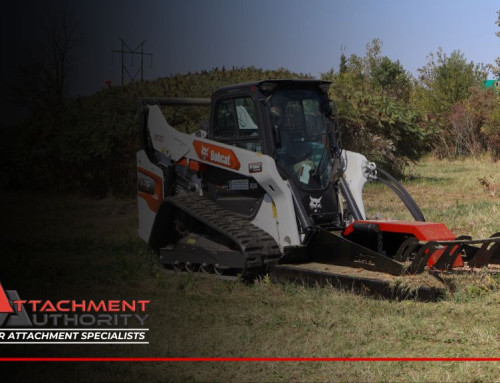
An open front brush cutter has a deck design that allows material to enter more freely from the front of the attachment. Instead of forcing vegetation completely under a fully enclosed shell before cutting, the open front gives brush, saplings, and tall growth a more direct path into the blades.
This design is often preferred for more aggressive land clearing. It can pull in thicker material more easily and is generally better suited for situations where the goal is knocking down overgrowth quickly rather than leaving behind a more uniform finish.
In practical use, an open front cutter is often chosen for reclaiming neglected property, clearing trails, cutting back heavy brush, and handling woody material where productivity matters more than appearance.
What is a closed deck brush cutter?
A closed deck brush cutter has a more enclosed housing around the cutting area. That design helps hold material under the deck longer, which can result in a more controlled cut and finer material breakdown before discharge.
This style is commonly used when the operator wants a cleaner overall finish. It is often a strong fit for maintaining fields, roadsides, property edges, and other areas where the growth still needs to be managed but the finished result matters more.
A closed deck cutter can still handle brush, but its strength is usually in more controlled vegetation management rather than the most aggressive first-pass clearing.
Where open front brush cutters usually perform better
Open front models shine when the material is dense, tall, or woody. Because they feed material more directly into the cutting path, they tend to be more efficient in heavy overgrowth and initial clearing work.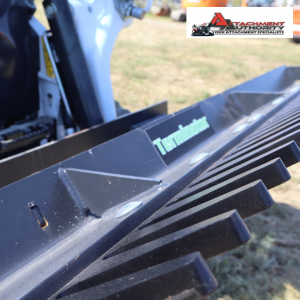
That makes them a strong choice for:
- Thick brush and saplings
- Overgrown fence lines and trail systems
- Property reclamation and land clearing
In these applications, the operator is often less concerned with a polished surface and more focused on getting through stubborn growth without slowing down. Open front cutters are built for that kind of work.
They also tend to work well when the cutter needs to attack material from the front rather than repeatedly passing over it. That can be useful in rough, uneven terrain where thick vegetation is standing upright and packed tightly.
Where closed deck brush cutters usually perform better
Closed deck models are often the better fit when the goal is maintenance rather than first-time clearing. Because the deck contains material longer, the result is usually more even and controlled. That can matter on properties where appearance, consistency, and repeat maintenance are part of the job.
A closed deck brush cutter is often the better choice for:
- Grass and light brush maintenance
- Property upkeep where a neater finish matters
- Repeated cutting on managed land
That does not mean a closed deck unit is only for light-duty work. Many are built tough enough for serious use. The difference is in how they process and discharge material. In a maintenance setting, that design can create a better-looking result with less scattered debris.
The tradeoff between speed and finish
This is usually where the decision becomes clear. Open front brush cutters often have the advantage in feed rate and aggressive clearing. Closed deck brush cutters often have the advantage in finish quality and cut control.
For someone clearing raw ground, overgrown lots, or thick volunteer growth, the open front design may save time and reduce frustration. For someone maintaining acreage, cleaning up field edges, or keeping commercial or residential properties under control, the closed deck option may produce a result that better fits the job.
Neither design is wrong. They are simply built around different priorities.
Material type matters more than many buyers expect
A lot of brush cutter decisions go wrong because buyers focus on deck style before they think carefully about the material they are actually cutting.
If the job mainly involves waist-high grass, light brush, and regular maintenance intervals, a closed deck cutter often makes more sense. If the job includes stubborn saplings, neglected growth, and rough clearing where the cutter has to bite into standing material, an open front model may be the stronger fit.
It also helps to think about how often the cutter will be used for each type of work. Some buyers occasionally cut heavy material but spend most of their time on lighter vegetation management. Others are doing repeated land-clearing jobs where aggressive feeding matters every day. The best choice is the one that matches the majority of the workload.
Other factors to consider before choosing
Deck style is important, but it should not be the only factor in the buying decision. Hydraulic requirements, machine compatibility, blade design, motor protection, deck construction, and overall build quality all matter just as much.
A buyer should also consider:
- Skid steer or compact track loader hydraulic flow and pressure
- The size of material being cut on a regular basis
- Whether the priority is rough clearing or cleaner maintenance
- Serviceability, parts access, and long-term durability
An open front cutter built lightly will still struggle in serious clearing. A closed deck cutter with strong construction and the right hydraulic match can still be very productive in tough conditions. Deck style should always be viewed alongside the full attachment design.
Which brush cutter is better?
The better brush cutter is the one that fits the work being done most often.
An open front brush cutter is usually better for aggressive cutting, thicker brush, faster feeding, and first-pass clearing. A closed deck brush cutter is usually better for controlled cutting, cleaner-looking results, and routine land maintenance.
For many buyers, the real question is not which design is better overall. The better question is what kind of work needs to get done this season, next season, and over the long haul. That answer usually points clearly toward one style or the other.
Attachment Authority helps customers sort through those details so they can choose brush cutters that match their machine, hydraulic setup, and job conditions. For help comparing open front and closed deck brush cutters, or for guidance on selecting the right setup for a skid steer or compact track loader, contact Attachment Authority.
Common questions you may have about open front and closed deck brush cutters
Is an open front brush cutter more aggressive than a closed deck model?
In most cases, yes. Open front designs usually feed standing material into the blades more directly, which makes them a strong fit for thick brush and first-time clearing.
Does a closed deck brush cutter leave a cleaner finish?
Generally, yes. Because the material stays under the deck longer, a closed deck cutter often delivers a more controlled and uniform result.
Can a closed deck brush cutter handle brush and saplings?
Many can, especially if they are built for heavy-duty work. The difference is that they are usually better suited for controlled cutting than the most aggressive front-feeding action.
Which style is better for property maintenance?
A closed deck brush cutter is often the better fit for ongoing maintenance where appearance and cut consistency matter.
Which style is better for land clearing?
An open front brush cutter is often the better choice for reclaiming overgrown areas, cutting thick vegetation, and handling rough clearing work efficiently.