What Should You Look for When Buying a Skid Steer Post Pounder for Fence Work?
Buying a skid steer post pounder makes sense when fence work is taking too long, wearing down your crew, or depending too much on rentals. The right post pounder can help you set posts faster, reduce manual labor, and keep more control over your schedule.
Not every post pounder fits every skid steer, post type, or ground condition. Before you buy, we recommend looking at compatibility, hydraulic requirements, post capacity, durability, visibility, and long-term value.
Need help choosing a post pounder that fits your skid steer, post type, and fence workload? Talk to us at Attachment Authority before you buy.
Start With the Fence Work You Do Most Often
Before buying, think about the fence work you handle most. Are you setting residential posts once in a while, or are you driving agricultural, perimeter, livestock, or commercial posts every week?
The more often you deal with repeated post installation, hard ground, tight timelines, rental delays, or crew fatigue, the more important it is to choose a post pounder built for real fence work.
Confirm Skid Steer Compatibility First
Compatibility should come first. Your post pounder needs to match your skid steer’s attachment plate, hydraulic system, flow requirements, pressure range, and operating capacity.
Before ordering, confirm your skid steer make and model, hydraulic flow, pressure requirements, mounting style, hose and coupler compatibility, and any special setup needed for operation.
If you’re unsure, don’t guess. For straight answers on hydraulic requirements, machine compatibility, and field performance, get help finding the right attachment from Attachment Authority.
Match the Post Pounder to Your Posts
Your post pounder should match the posts you install most often. Post size, material, length, and shape all matter.
Before buying, check the maximum post diameter, post guide design, driver cup or cap options, and any limits on post shape or material. This matters even more if you move between residential, farm, and commercial fence work.
Consider Ground Conditions
Fence work rarely happens in perfect ground. You may run into clay, gravel, roots, slopes, wet areas, frozen ground, or uneven terrain.
The right post pounder should have the driving force and stability needed for the conditions you see most. If it’s too light-duty for the work, it can slow your crew down and create more corrections in the field.
Look for Durability
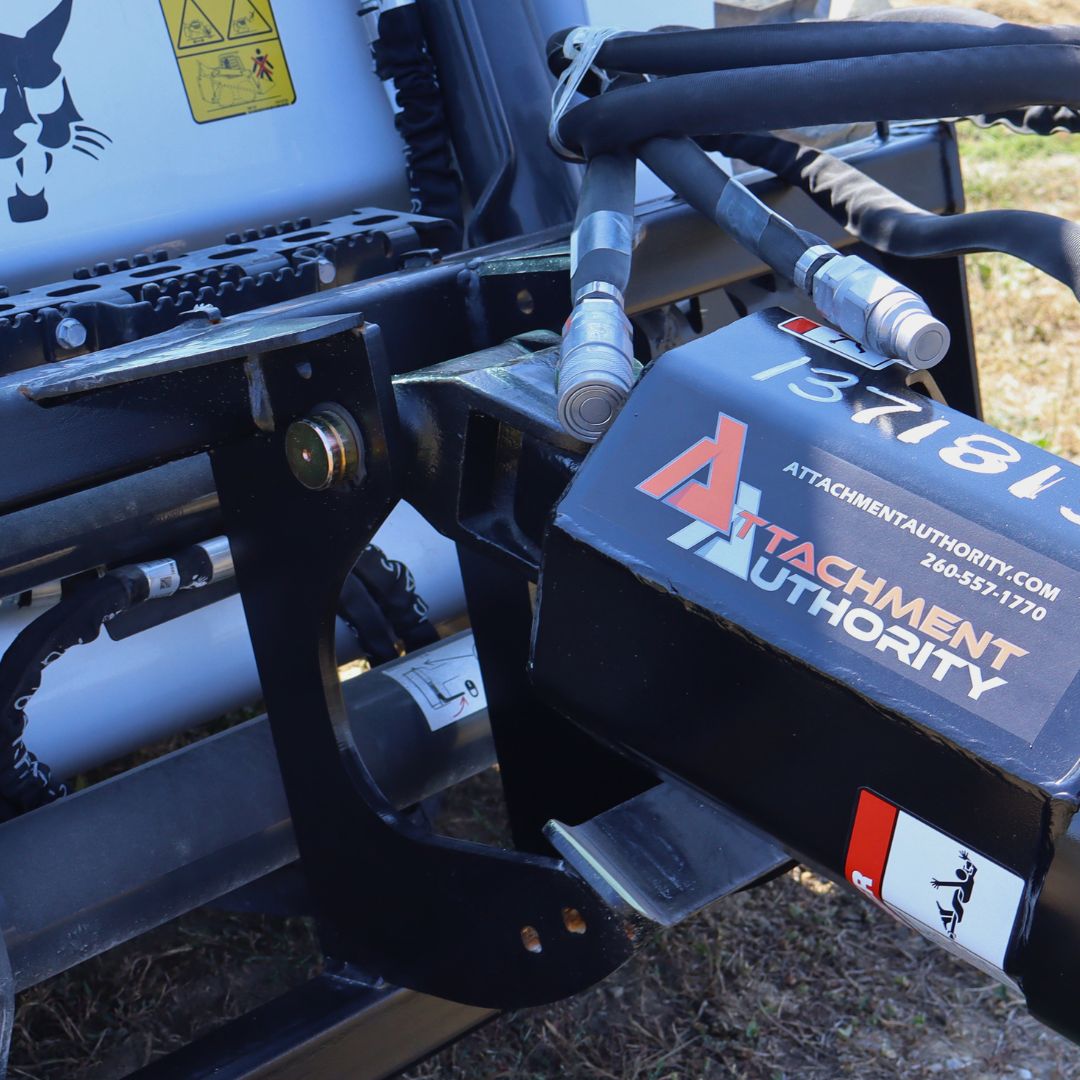
You don’t buy a post pounder to let it sit in the shop. If you’re using it on repeated installs, it needs to handle impact, vibration, transport, rough terrain, and long days in the field.
Look closely at frame construction, wear areas, weld quality, moving parts, hose routing, and serviceability. If your current equipment is slowing down, wearing out, or needing too many repairs, our guide on signs you may need a new post pounder can help you decide whether it’s time to upgrade.
Compare Labor Savings Against Cost
The cost of buying a skid steer post pounder should be measured against labor, rental delays, and repeated use. If your crew is setting posts manually or waiting on rental equipment, ownership may make sense.
A post pounder may be a smart investment when fence installation is regular work, your crew is losing time to manual post setting, rental availability is slowing jobs down, and faster post setting could help you take on more work.
The goal isn’t just to own another attachment. It’s to help your skid steer earn more on fence jobs.
Choose the Post Pounder That Fits the Work
The best skid steer post pounder is the one that fits your machine, post type, hydraulic setup, ground conditions, and workload. Don’t choose only by price. Choose the attachment that helps you keep jobs moving, reduce downtime, and stand up to repeated fence work.
For help comparing options before buying, contact Attachment Authority for straight answers on compatibility, application fit, and long-term value.
Questions You May Still Have About Buying a Skid Steer Post Pounder
What should I check before buying a skid steer post pounder?
Check skid steer compatibility, hydraulic requirements, mounting style, post size capacity, post type, ground conditions, attachment weight, and expected workload.
Is a skid steer post pounder worth it for fence work?
Yes, it can be worth it when fence installation is regular work and manual post setting is slowing your crew down. It can help reduce labor, improve speed, limit rental dependency, and give you more control over scheduling.
Does every skid steer post pounder fit every skid steer?
No. Fit depends on your skid steer’s mounting system, hydraulic flow, pressure, operating capacity, and the attachment’s requirements.
Why does durability matter when buying a skid steer post pounder?
Durability matters because fence work puts repeated impact, vibration, and field stress on the attachment. A stronger post pounder can help reduce downtime, repairs, and delays across multiple installs.