The Complete Pre-Purchase Guide: What to Ask Before Buying an Auger Bit
For Contractors, Farmers, Landscapers, Owner-Operators, and Rural Landowners
Buying an auger bit might seem simple until you’re stuck mid-job with the wrong size, broken teeth, or a drive system that can’t keep up. Whether you’re drilling a few holes or thousands, getting the right bit matters. The wrong one slows you down, wears out fast, or just doesn’t work as expected.
This guide walks through the key questions every buyer should ask before purchasing. It’s designed for the full range of Attachment Authority customers, from seasoned contractors to rural property owners, so you can make the right call the first time.
Start with the Ground You’re Drilling
What kind of material am I working in?
Soil conditions drive the entire decision. Are you drilling into soft loam, heavy clay, rocky fill, or frozen ground? Your bit should match the toughest material you expect to hit. Loose soil works with standard earth bits. Clay or compacted material needs more aggressive flighting and sharper teeth. Rocky, frozen, or asphalt-heavy conditions require carbide or bullet-style cutting heads.
Will the bit handle changing ground conditions across the site?
If your property or jobsite has variable soil types, plan for the most demanding areas. It’s better to overprepare than to stall out halfway through.
Match the Bit to the Job at Hand
What am I drilling and what size hole do I need?
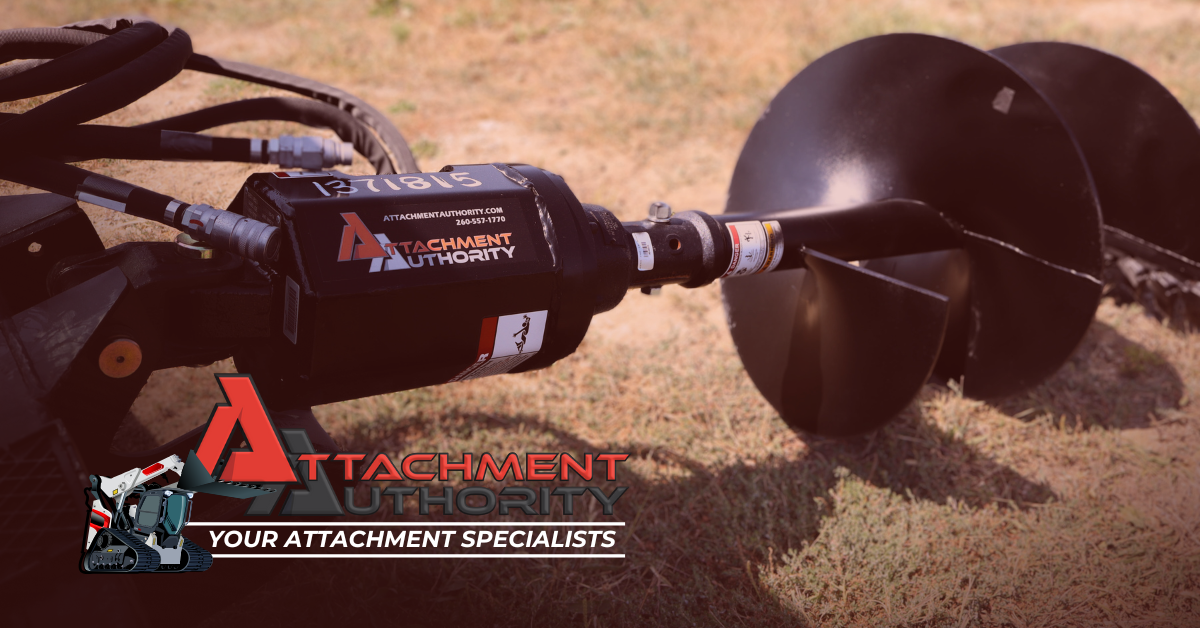
Are you setting fence posts, drilling footings, planting trees, or digging test holes? Your use case determines the bit style. Standard bits are ideal for general-purpose earth drilling. Tree augers are designed for planting. Rock augers use bullet teeth for hard conditions. Tapered or clean-out bits help when drilling deep or needing clean-sided holes.
What diameter and depth do I need to reach?
Choose the smallest diameter that meets your project’s requirement. Every extra inch adds stress to your drive. As for depth, check your equipment’s working depth and determine if an extension is necessary.
Is this for a one-time job or ongoing use?
If it’s a short-term project, cost may be your main concern. But for repeated use or tough soil, long-term durability, rebuildability, and service access matter more.
Know Your Equipment
What machine am I using, and what are its limitations?
Your skid steer, mini skid, tractor, or excavator has specific hydraulic flow, pressure, and lifting capacity limits. Know your GPM, PSI, and weight capacity before choosing a bit size.
Can my auger drive handle the torque and diameter I need?
Drives have rated torque based on your machine’s hydraulic specs. Make sure the bit diameter, ground conditions, and expected workload are within the drive’s limits.
Is the bit connection compatible with my drive?
Common output shaft types include 2-inch hex, 2.5-inch hex, and 2.56-inch round. Make sure the bit hub matches your drive shaft exactly.
Will I need extensions and are they compatible?
For deep drilling, extensions are often necessary. They need to match your shaft size and maintain structural and torque integrity.
Think Through Tooth and Head Options
What cutting head and tooth pattern does this bit use?
Tooth and pilot point design directly affect performance. Choose standard dirt teeth for light-duty jobs, chisel teeth for compact soils, tungsten carbide for high abrasion, and bullet teeth for hard rock or asphalt.
Can I replace the teeth and pilot later?
Serviceable bits let you replace worn components instead of replacing the whole bit. This matters more when drilling in rough ground or when using the bit often.
How aggressive is the flight design?
Tighter pitch flight speeds up drilling in soft ground. Open flight helps in sticky or dense soils by clearing material more easily.
Don’t Overlook Support and Service
Is the bit in stock or on a long lead time?
Always check availability before scheduling a job. Some sizes and styles move quickly, especially during seasonal demand.
Can I get replacement teeth or parts easily?
Having access to replacement teeth, bolts, and pilots is essential. Delays in parts mean downtime, which hits your bottom line.
Who can help if I have questions or compatibility issues?
Attachment Authority offers expert support before and after the sale. Whether it’s confirming fit, reviewing ground conditions, or walking through torque specs, our team helps you buy with confidence.
What kind of warranty or backing does the bit come with?
Most quality bits come with a manufacturer’s warranty, but support from the supplier is just as important. Choose vendors who stand behind what they sell and help resolve issues quickly.
Think Past the Upfront Price
What’s the total cost of ownership for this bit?
Cheaper bits may wear out quickly or slow down the job. Consider the cost of downtime, replacement cycles, and jobsite efficiency. A better-built bit pays off faster in high-demand settings.
Do I need more than one bit for this job or property?
Some job sites or regions require flexibility. A standard bit might be fine in some areas, while other zones may require a rock bit or tree auger.
Will I need accessories or adapters to run this setup properly?
Common add-ons include alignment cradles, bolt-on hubs, auger extensions, and custom mounts. Don’t get stuck on-site without the right gear.
A Smarter Way to Buy
Before you order, make sure you can answer these questions clearly. What kind of material am I drilling? What diameter and depth do I need? Is my machine and drive capable of running this bit? Will this bit perform well and hold up under actual use? Is everything compatible and supported with parts and service?
Still unsure? Attachment Authority specializes in augers. We help match the right bit to your machine, drive, ground conditions, and job goals. You get expert guidance, reliable parts support, and the confidence to drill without second-guessing.