If you run a landscaping company, your skid steer rake attachment needs to do more than just move dirt. It needs to prep seedbeds, remove debris, level uneven ground, and help your crew finish jobs faster without sacrificing quality.
The truth is there is no single best rake for every landscaping company. The right choice depends on the type of projects you take on, your machine’s hydraulic capabilities, and the level of finish your clients expect.
Here is how to determine which skid steer rake is best for your operation.
What Are Your Most Common Landscaping Jobs?
Before choosing a rake, look at your core services. Are you doing new lawn installations? Are you regrading yards after construction? Are you cleaning up rocky lots? Are you handling light land clearing or brush removal? The best rake is the one that matches your highest-frequency services.
Landscape Rake
A landscape rake, often called a rock rake, is a strong all-around choice for companies focused on surface prep and debris removal.
- Ideal for: Rock removal, soil leveling, rough grading
- Strength: Separates rocks and debris from soil quickly
- Hydraulic demand: Low
Why it works for landscaping companies:
If you regularly prep residential lawns or clean up after excavation work, a landscape rake gives you versatility without high hydraulic requirements. It is cost-effective and easy for crews to operate.
Limitations: It does not pulverize soil or create a seed-ready finish on its own.
Power Rake
A power rake, also known as a soil conditioner, uses a hydraulic drum with carbide teeth to break up clumps, level soil, and windrow debris.
- Ideal for: Final grading, seedbed prep, turf renovation
- Strength: Produces a smooth, professional finish
- Hydraulic demand: Moderate to high
Why it works for landscaping companies:
If your reputation depends on clean, level lawns and high-end residential finishes, a power rake is often the best investment. It reduces manual raking, minimizes rework, and delivers a consistent surface that clients notice.
Limitations: Higher upfront cost and requires sufficient hydraulic flow from your skid steer.
Root Rake
A root rake is designed for heavier clearing tasks and more aggressive material separation.
- Ideal for: Brush removal, light land clearing, root extraction
- Strength: Heavy-duty tines for pulling organic debris
- Hydraulic demand: Low unless paired with grapple
Why it works for landscaping companies:
If your company frequently handles overgrown properties or small lot clearing before landscape installation, a root rake can expand your service offerings.
Limitations: Not designed for finish grading or seedbed prep.
What Is the “Best” Skid Steer Rake for Landscaping Companies?
For companies focused on high-quality lawn installation and finish grading, the best choice is a power rake because it breaks up soil, smooths the surface, and creates a cleaner seedbed with less handwork.
For companies focused on general landscaping, rock removal, and surface prep, the best choice is a landscape rake because it handles a wide range of common jobs, offers good versatility, and typically requires less hydraulic power.
For companies expanding into lot clearing and heavy debris removal, the best choice is a root rake because it is built to pull roots, brush, and organic debris more effectively than finish-focused rakes.
In many cases, landscaping companies start with a landscape rake for versatility, then add a power rake later as they take on more finish-focused work and need a cleaner final result.
In Conclusion
There is no universal best rake. There is only the right rake for your services, your machine, and your growth plans.
- Choose a landscape rake for versatile surface prep and cleanup.
- Choose a power rake for premium finish work and seedbed preparation.
- Choose a root rake if clearing and brush removal are part of your core offerings.
When you match your attachment to your most profitable services, you protect margins, improve efficiency, and deliver consistent results that keep clients coming back.
Need Help Choosing the Right Rake for Your Landscaping Business? Attachment Authority helps contractors and landscaping professionals select attachments that align with their equipment, workload, and growth goals. Whether you are upgrading your fleet or investing in your first skid steer rake, our team can help you make a confident, ROI-focused decision.
Common Questions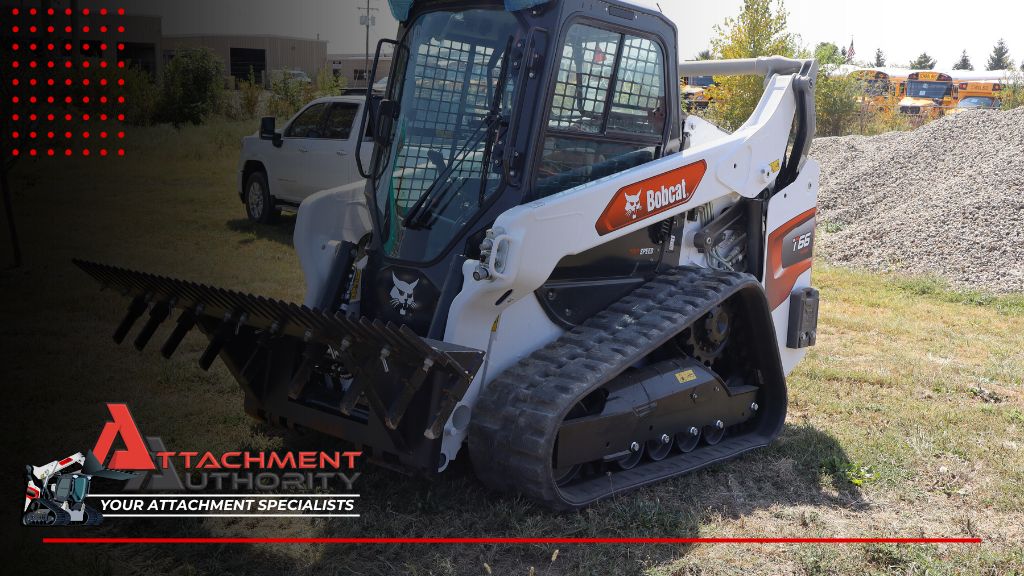
What makes a skid steer rake attachment the “best” for landscaping companies?
The best rake is the one that fits the company’s most common jobs. For most landscapers, that means a rake that handles cleanup, grading, and soil prep while leaving a clean finish.
Should landscapers choose a landscape rake, rock rake, or power rake?
It depends on the work. Landscape rakes are good for general cleanup, rock rakes help separate debris and stone, and power rakes are better for more aggressive soil prep and finish work.
What size rake attachment works best for landscaping?
The right size depends on the skid steer and the jobsite. Wider rakes cover more ground, while narrower models are easier to control in tighter residential spaces.
Is a heavier-duty rake always better?
Not always. A heavier rake may last longer in rough conditions, but it can also reduce control on finish work. The best choice balances durability with maneuverability.
What features matter most in a landscaping rake attachment?
Landscapers should look for strong teeth, durable construction, replaceable wear parts, easy hookup, and proper machine compatibility. Simple maintenance is also important.
Can one rake handle both cleanup and finish prep?
Sometimes. A versatile rake can handle both, but some attachments are better at one job than the other. It depends on how specialized the work is.
How can a landscaping company choose the right rake?
Start with the material being worked, the skid steer’s specs, and the finish quality needed. The right rake should improve productivity and reduce rework.