When it comes to setting fence posts, signposts, or stakes, having a reliable, efficient post-pounder is essential. Choosing between a manual or hydraulic post-pounder boils down to the size of your project, ground conditions, and your budget. While manual pounders have their place, a hydraulic post pounder offers superior power, efficiency, and precision for larger-scale or tough ground jobs. Here’s a closer look at each option and why a hydraulic post-pounder might be the right choice for you.
What is a Post Pounder?
A post-pounder (or post-driver) is a tool specifically designed to drive posts deep into the ground, securing them for structures like fences, signage, or other durable projects. Available in both manual and hydraulic models, each type serves different needs, but hydraulic post-pounders truly shine when it comes to speed and power.
Manual Post Pounders
Manual post-pounders are straightforward, hand-operated tools that use a weighted cylinder to drive posts into the ground. They’re lifted and dropped repeatedly over the post to push it into the soil.
Pros of Manual Post Pounders
- Affordability: Manual post-pounders are often the most budget-friendly option.
- Portability: These pounders are light and easy to transport, especially for small projects or remote areas.
- No Power Needed: Manual pounders don’t rely on power sources, making them ideal for locations without access to fuel or electricity.
- Low Maintenance: With few moving parts, manual pounders require minimal maintenance.
Cons of Manual Post Pounders
- Physical Effort: Driving posts manually is labor-intensive, which can lead to fatigue, especially on larger projects.
- Limited Efficiency on Hard Ground: Manual pounders struggle on rocky or compacted ground, requiring significantly more effort.
- Time-Consuming: For projects with numerous posts, manual pounders are notably slower compared to hydraulic alternatives.
Best for:
Small-scale jobs with fewer posts, softer ground, or where budget is the top priority.
Hydraulic Post Pounders
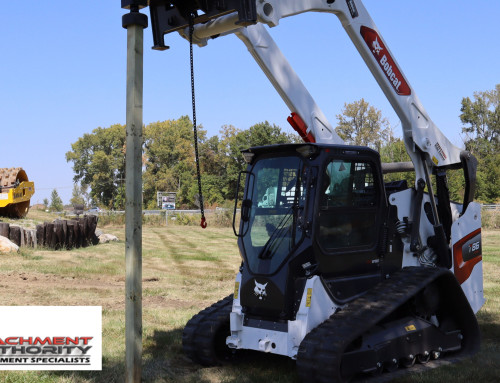
Hydraulic post-pounders take post-driving to the next level by using hydraulic power to deliver rapid, forceful impacts, making it easier to install posts efficiently, even in tough ground. These powerful machines can often be attached to equipment like skid steers, tractors, or excavators, harnessing their hydraulic systems for quick and reliable performance.
Pros of Hydraulic Post Pounders
- Unmatched Power and Speed: Hydraulic post pounders deliver far more force than manual models, efficiently driving posts into hard or rocky ground in seconds.
- Less Physical Strain: By doing the heavy lifting, hydraulic pounders reduce operator fatigue, allowing for faster completion times and minimal strain on workers.
- Precision and Consistency: Many hydraulic models offer adjustable settings to control post depth and height, making it easy to achieve a consistent look across large areas.
- Time-Saving: For large jobs, hydraulic post-pounders drastically reduce the time needed to complete projects, making them ideal for contractors or frequent large-scale installations.
Cons of Hydraulic Post Pounders
- Higher Cost: Hydraulic post-pounders are more expensive upfront, both for the unit itself and any compatible equipment required to operate it.
- Equipment Requirements: Many hydraulic pounders need to attach to a skid steer, tractor, or similar equipment, which can be a barrier for users without access to these machines.
- Less Portability: Because they’re designed to be used with larger equipment, hydraulic post-pounders are bulkier and may be limited in more remote or difficult-to-access areas.
Best for:
Large-scale projects, tough ground conditions, or anyone looking to maximize speed, efficiency, and precision for consistent post-installation.
Which Should You Choose?
To determine whether a manual or hydraulic post pounder is right for you, consider these questions:
- How large is your project? For just a few posts, a manual pounder could suffice. However, for larger installations, a hydraulic model will save you both time and effort.
- What’s the ground condition? For hard, rocky, or compacted soil, hydraulic post-pounders offer the force needed to drive posts in without wearing out the operator.
- What’s your budget? While manual pounders have a lower upfront cost, the added efficiency and time savings of hydraulic pounders may justify the investment, especially if you plan to use it frequently.
- Do you have compatible equipment? If you already own a tractor or skid steer, adding a hydraulic post-pounder attachment can be a straightforward upgrade.
Final Verdict: Hydraulic Leads the Way for Larger Jobs
If budget and simplicity are top concerns, a manual post-pounder will get the job done for smaller projects on softer ground. However, when it comes to power, efficiency, and the ability to tackle tough terrain, a hydraulic post-pounder is the clear winner. Not only will it save you time, but it will also significantly reduce the physical strain on your team, making it a smart investment for long-term, repeated use.
Ready to Upgrade Your Post Pounder?
At Attachment Authority, we offer a wide range of post-pounders to meet your needs, from cost-effective manual options to advanced hydraulic models. Explore our inventory and let us help you find the right attachment for your next project.