Why Rock Auger Bits Matter in Tough Ground Conditions
When standard auger bits reach their limit, rock auger bits are designed to take over. In hard drilling environments, the difference between a general-purpose bit and a rock bit can have a direct impact on jobsite efficiency, equipment wear, and overall drilling performance. For contractors and operators working in fractured rock, shale, dense clay, or heavily compacted ground, using the right bit is less about preference and more about protecting the machine while keeping the job moving.
Rock auger bits are built for conditions that put standard dirt bits under too much stress. In the same way buyers think through application, compatibility, and expected wear in The Complete Pre-Purchase Guide: What to Ask Before Buying an Auger Bit, choosing a rock bit starts with understanding what the ground is really going to demand.
What Makes a Rock Auger Bit Different
A rock auger bit is engineered specifically for strength, penetration, and durability in extreme conditions. Unlike a standard dirt bit that is built to move loose to moderately compacted material, a rock auger bit is made to break through harsh ground without stalling constantly or wearing down too quickly. The difference shows up in the bit design, the cutting teeth, the pilot, and the overall way the bit handles torque under load.
These bits are commonly used by contractors, utility crews, fencing professionals, and foundation installers working in rocky or abrasive terrain. In many cases, the same early buying questions that come up in Top 3 Questions to Ask Before Buying an Auger Bit for Your Skid Steer also apply here, especially when the job calls for more than a standard digging setup.
Heavy-Duty Construction for Harder Drilling
One of the biggest differences in a rock auger bit is the strength of the flighting. Rock bits typically use thicker, heavier-duty steel flighting so they can handle higher torque loads and repeated impact from dense material. That added strength helps reduce the risk of bending, cracking, or structural damage when the bit meets resistance below the surface.
Rock bits also rely on more aggressive tooth designs. Instead of flatter cutting edges that are effective in softer soil, many rock auger bits use carbide teeth or bullet-style picks that are intended to chip, fracture, and break through harder material. That cutting action is better suited for rough ground where a standard dirt bit would lose efficiency quickly.
The pilot is another key part of the design. A reinforced pilot helps stabilize the bit at entry and keeps it from walking when it starts drilling into a hard surface. That stability matters because difficult ground conditions leave less room for error, especially when drilling for posts, piers, or utility placement. Once the right bit is selected, proper drilling technique becomes just as important, which is why the same operating habits discussed in How to Use Auger Bits Effectively With Your Skid Steer still matter even in more demanding terrain.
When to Use a Rock Auger Bit Instead of a Dirt Bit
A rock auger bit makes sense when the ground is too hard or abrasive for a standard dirt bit to perform efficiently. If a standard bit is stalling often, wearing teeth too quickly, struggling to penetrate compacted material, or putting too much strain on the hydraulic system, that is usually a sign the application calls for a different tool.
This often comes up in rocky regions where fence posts need to be installed through shale, utility work has to be completed in mixed ground conditions, or foundation drilling involves dense and unpredictable soil. In those situations, a dirt bit may still turn, but that does not mean it is the right tool for the job. A lot of those fit and application questions mirror the buying considerations covered in The Complete Pre-Purchase Guide: What to Ask Before Buying an Auger Bit, especially when the cost of choosing the wrong bit shows up as downtime and premature wear.
Common Applications for Rock Auger Bits
Rock auger bits are often used in jobs where ground conditions cannot be treated as standard soil. Utility pole installation in rocky areas is a common example. Fence post installation in shale or hard clay is another. They are also frequently used for foundation piers, sign installation, and guardrail work along roadways where the operator may run into mixed or abrasive material.
These are not jobs where speed alone should drive the decision. In harder ground, controlled penetration and consistent cutting matter more than fast drilling in ideal conditions. That is part of the reason buyers need to think beyond just bit diameter and ask the same practical questions raised in Top 3 Questions to Ask Before Buying an Auger Bit for Your Skid Steer, because the machine, the drive, and the actual ground conditions all need to work together.
Rock Auger Bits vs. Standard Dirt Auger Bits

The difference between a rock auger bit and a standard dirt auger bit comes down to application and resistance. A standard dirt bit is designed for loose soil, moderate compaction, and faster digging in easier conditions. It usually requires less torque and works well when the material can be lifted and cleared with less resistance.
A rock auger bit is different. It is built for fractured rock, shale, dense clay, and abrasive ground where penetration is slower and resistance is much higher. It typically requires more torque, more patience, and a more controlled drilling approach. That slower pace is not a disadvantage. It is part of what allows the bit to survive harder conditions while protecting the auger system from unnecessary stress.
Operators who already understand how technique affects performance usually see this connection quickly, and that lines up closely with the same real-world operating principles outlined in How to Use Auger Bits Effectively With Your Skid Steer.
Hydraulic Flow and Torque Still Matter
Upgrading to a rock auger bit does not solve the whole problem if the auger drive and machine are underpowered for the job. Rock bits require more torque than standard bits, so buyers need to verify the auger drive’s torque rating, the machine’s hydraulic flow and pressure, and the connection between the drive hub and the bit. If the drive cannot supply enough power, penetration will still be poor and the equipment will end up working harder than it should.
That is why Attachment Authority emphasizes compatibility just as much as durability. A heavy-duty bit only performs the way it should when it is paired with the right auger drive and the right machine setup. Buyers working through that process usually benefit from the same equipment-matching mindset found in The Complete Pre-Purchase Guide: What to Ask Before Buying an Auger Bit, because even the toughest bit is only as effective as the system behind it.
Maintenance and Service Life
Rock auger bits are built for harsh use, but they still require regular inspection and maintenance. Carbide teeth should be checked for wear, dull teeth should be replaced before they create bigger performance issues, and the pilot should be monitored for damage that could affect stability during drilling. After heavy use, the flighting should also be inspected for cracks or signs of structural fatigue.
Routine maintenance is what helps preserve the value of a premium bit. Buyers sometimes focus on the upfront cost of a rock auger bit without considering how much more expensive repeated wear, failed drilling attempts, or damaged components can become over time. That is another reason the buying conversation tends to overlap with Top 3 Questions to Ask Before Buying an Auger Bit for Your Skid Steer, because long-term performance starts with choosing the right bit and then maintaining it properly.
Is a Rock Auger Bit Worth the Investment
If the work regularly involves hard, rocky, compacted, or abrasive ground, a rock auger bit is usually worth the higher upfront cost. It can help reduce job delays, lower the frequency of bit replacement, improve drilling control, and reduce unnecessary stress on the auger drive. For contractors dealing with inconsistent ground conditions, having a rock bit available creates more flexibility and makes project timelines more predictable.
The value is not just in the bit lasting longer. It is in having a tool that is built for the conditions instead of forcing a standard dirt bit to do work it was never meant to handle. Once that setup is in the field, results also depend on technique, pressure control, and operator habits, which naturally ties back to How to Use Auger Bits Effectively With Your Skid Steer.
What Attachment Authority Recommends
For buyers dealing with fractured rock, shale, dense clay, or compacted ground, the best starting point is to evaluate the actual material being drilled, the torque available from the auger drive, and the machine’s hydraulic capability. From there, it becomes easier to determine whether a rock auger bit is the right move or whether another part of the setup needs attention first.
Attachment Authority helps buyers sort through those variables with a focus on real-world performance, compatibility, and long-term durability. Instead of guessing based on appearance alone, buyers can match the right auger bit to the job conditions, machine, and drive so drilling stays productive instead of becoming a constant equipment fight.
Final Thoughts on Rock Auger Bits
Rock auger bits are purpose-built for extreme job conditions where standard dirt bits often fall short. They are designed for harder materials, greater resistance, and more demanding drilling environments. When they are matched correctly to the auger drive, the machine, and the application, they improve control, reduce unnecessary wear, and make difficult drilling conditions much more manageable.
For operators working in tough ground on a regular basis, the right rock auger bit is not just another accessory. It is a practical upgrade that protects equipment, improves drilling consistency, and helps keep the job moving.
Questions you may still have about rock auger bits
What is a rock auger bit used for?
A rock auger bit is used for drilling in fractured rock, shale, dense clay, compacted ground, and other abrasive conditions where a standard dirt bit may struggle or wear out too quickly.
How is a rock auger bit different from a dirt auger bit?
A rock auger bit is built with heavier-duty construction, more aggressive cutting teeth, and reinforced components designed for harder ground. A dirt auger bit is better suited for softer or moderately compacted soil.
Do rock auger bits require more torque?
Yes, rock auger bits typically require more torque than standard dirt bits because they are drilling into material with much higher resistance.
Can I use a rock auger bit on any auger drive?
Not always. The auger drive has to provide enough torque, and the bit connection needs to match the drive hub. Machine hydraulic flow and pressure also need to support the setup.
When should I switch from a dirt bit to a rock bit?
If a dirt bit is stalling often, wearing teeth quickly, struggling to penetrate compacted or rocky ground, or putting too much strain on the machine, it is usually time to consider a rock auger bit.
Are rock auger bits worth the extra cost?
In demanding ground conditions, they usually are. They can reduce downtime, improve drilling control, lower replacement frequency, and help protect the auger drive from unnecessary stress.
What maintenance do rock auger bits need?
Rock auger bits should be inspected regularly for worn teeth, pilot damage, cracked flighting, and any signs of structural wear. Replacing worn cutting components early helps preserve performance.
What equipment can run a rock auger bit?
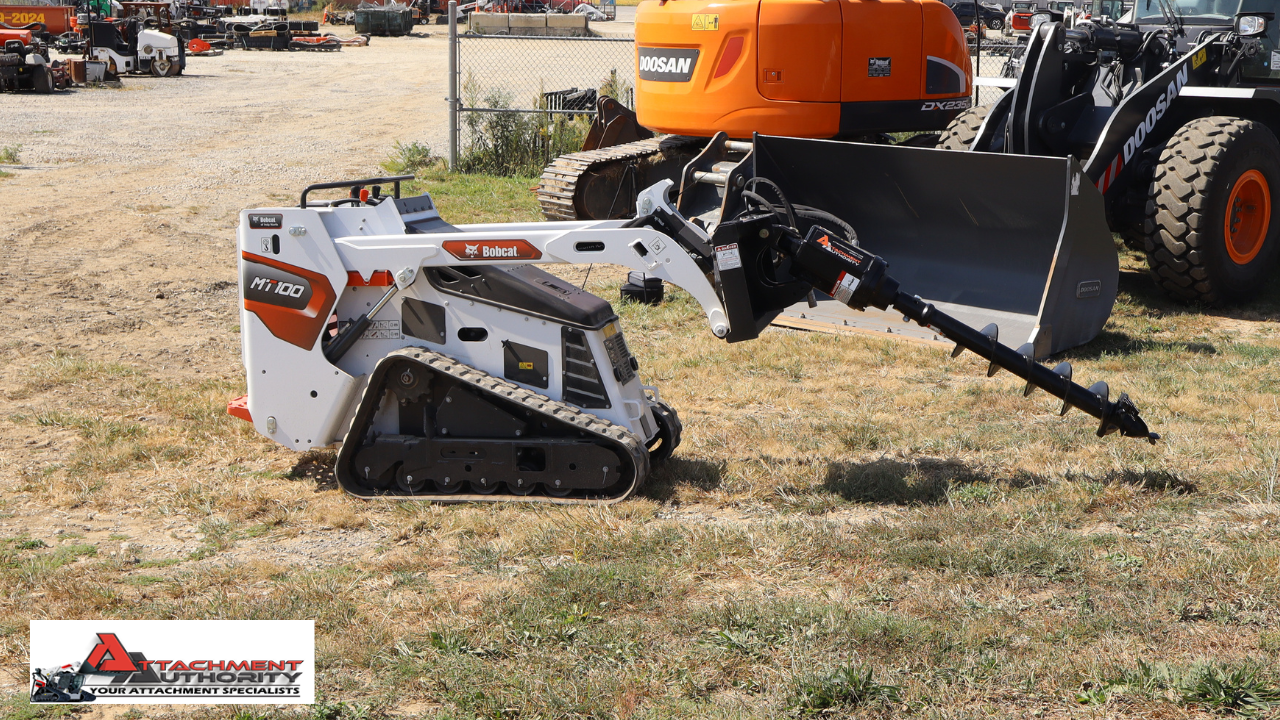
Rock auger bits can be used with compatible skid steers, mini skid steers, tractors, and excavators, as long as the auger drive, hydraulic output, and bit connection are matched correctly.