The right skid steer attachment can help you get more work from a machine we already own. Instead of waiting on rented equipment or handling recurring jobs by hand, we can use the skid steer for fencing, clearing, grading, land maintenance, and seasonal repairs.
At Attachment Authority, we don’t recommend buying an attachment just because it might be useful someday but rather with the jobs that repeatedly cost you time, labor, or rental money. From there, we match the attachment to the skid steer, working conditions, and workload.
You can explore our full selection of skid steer attachments before narrowing down the right fit.
Start With the Farm Jobs That Keep Coming Back
Before choosing an attachment, we look at the work that regularly slows you down:
- Digging holes and installing fence posts
- Clearing brush along pastures and fence lines
- Repairing gravel lanes, barn lots, and access roads
- Maintaining livestock areas and overgrown ground
- Reducing hired labor or repeated equipment rentals
Once we know which jobs occur most often, it’s easier to decide which attachment should come first.
Augers for Fence Posts and Farm Projects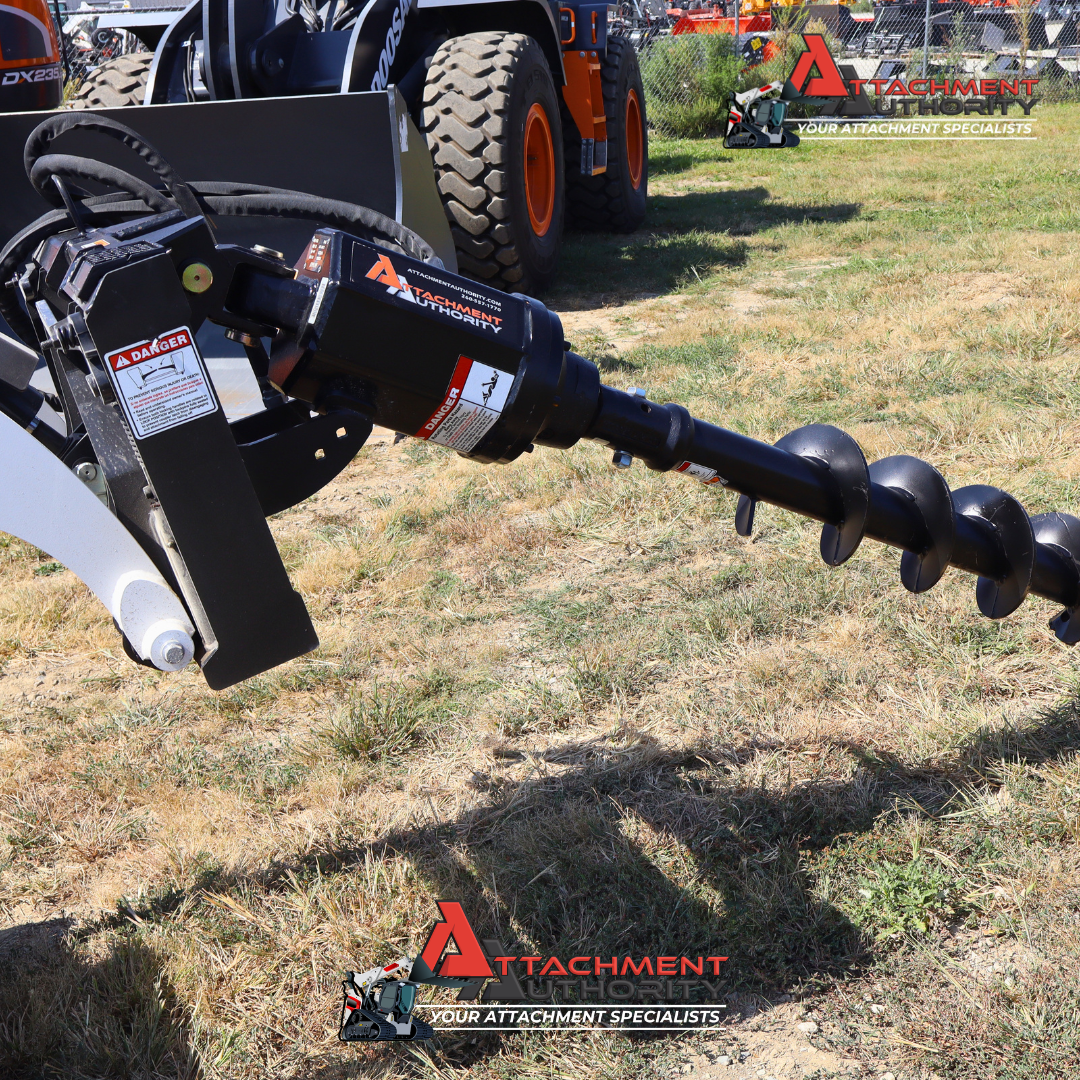
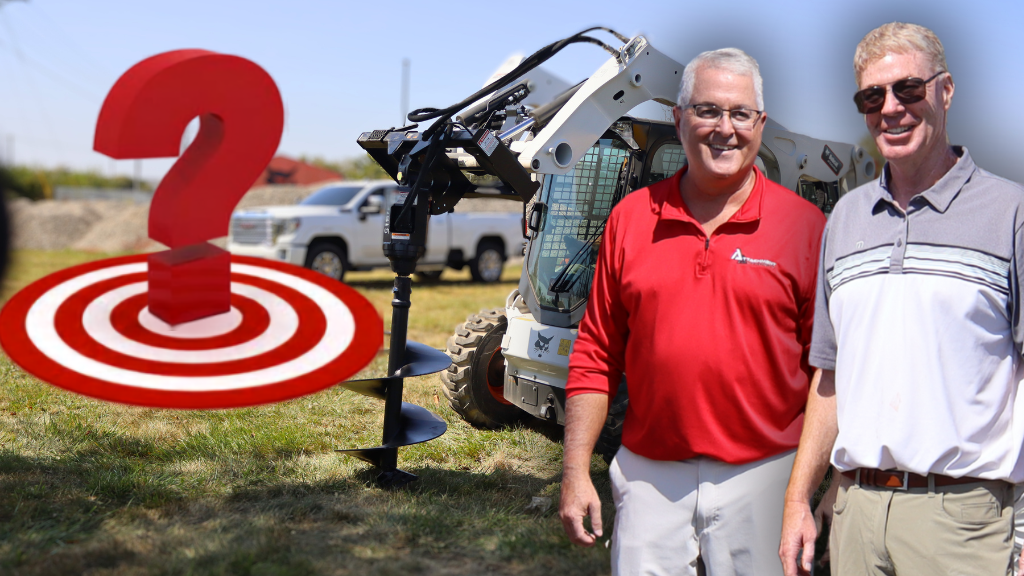
A skid steer auger can help you dig repeatable holes for fence posts, gates, livestock areas, signs, trees, and other farm projects. The auger drive provides the turning force, while the bit cuts into the ground and carries material out of the hole.
We don’t select an auger based only on the hole diameter. Soil, clay, roots, compacted dirt, gravel, and rocky ground can all require different bit and drive combinations.
Our guide to using augers in agriculture explains how augers support fencing and land-maintenance projects. Before ordering, we also recommend reviewing our pre-purchase auger bit guide so we can confirm the hole size, ground, workload, and machine requirements.
Post Pounders for Recurring Fence Work
When fencing is a regular part of the workload, a post pounder can help you install posts faster and reduce the physical strain of manual driving.
Post pounders can be useful for pasture divisions, livestock fencing, perimeter fence, gate areas, and ongoing repairs. However, they aren’t automatically compatible with every machine or post.
Before choosing one, we confirm the skid steer’s hydraulics, mounting style, operating capacity, post type, post size, ground conditions, and expected frequency of use. Our guide to buying a skid steer post pounder for fence work covers the main fit, durability, and workload questions we should answer before purchasing.
Brush Cutters for Pastures and Fence Lines
Brush cutters help you reclaim fence lines, field edges, trails, ditches, and pasture areas that have become overgrown.
We don’t choose a cutter based only on its width but also the thickest vegetation we expect to handle, the terrain, hydraulic output, attachment weight, and how often the cutter will be used.
Hydraulic compatibility is especially important. A cutter that doesn’t match the skid steer’s flow and pressure may not deliver the performance we need. Our guide to brush cutter GPM and pressure requirements explains what we should check before making a decision.
We can also compare available skid steer brush cutters based on vegetation, machine output, and workload.
Rakes and Grading Attachments for Farm Maintenance
Farm lanes, barn lots, pasture entrances, and equipment paths take regular wear. Rakes and grading attachments can help you pull debris, separate rocks, loosen compacted material, smooth rough surfaces, and stay ahead of washouts.
The right attachment depends on the condition of the ground and the finish we need. A root rake is better suited to aggressive clearing, while a landscape rake supports cleanup and rock separation. A power rake can provide more soil conditioning and surface refinement.
Our guide to skid steer rake attachments for tough jobs explains how different rake designs handle rocks, debris, soil preparation, and grading work. You can also browse our complete selection of skid steer rake attachments.
What Do We Check Before Buying?
No matter which attachment we’re considering, we need to confirm that it fits the machine and the work. We recommend checking:
- Skid steer make, model, operating capacity, and mounting style
- Hydraulic flow, pressure, and standard- or high-flow capability
- Attachment weight and stability requirements
- Ground, terrain, vegetation, post, or material conditions
- Frequency of use and expected daily workload
- Required width, depth, capacity, or finished result
We’d rather answer these questions before the attachment ships than lose time correcting a compatibility problem later.
Choose Attachments That Fit the Farm
The most useful skid steer attachments for farmers aren’t necessarily the ones with the most features but instead the attachments that fit the machine, match recurring jobs, and hold up to the farm’s actual working conditions.
Here at Attachment Authority, we help compare machine requirements, hydraulics, ground conditions, and workload before we recommend a setup. The right attachment can reduce labor, limit rental dependency, protect the skid steer, and keep farm work moving.
Contact our attachment specialists with your skid steer model and the job you need to complete. We’ll help you narrow down the right attachment for the machine and the farm.
Use code AUGER10 at checkout to receive 10% off auger equipment.
Questions About Skid Steer Attachments for Farmers
What skid steer attachment should we buy first for farm work?
We should start with the recurring job that costs the most time, labor, or rental money. Fencing may point you toward an auger or post pounder, while overgrowth may make a brush cutter the stronger first purchase.
Are skid steer attachments worth owning on a farm?
They can be when we use them regularly enough to reduce hand labor, hired work, rentals, and scheduling delays. The value depends on workload, purchase cost, maintenance, and how often the attachment will be used.
What should we check before buying an attachment?
We should confirm the machine model, hydraulic flow and pressure, mounting style, operating capacity, attachment weight, working conditions, and expected workload.
Can every skid steer operate the same attachments?
No. Hydraulic requirements, mounting systems, machine capacity, attachment weight, and operating limits vary. We’ll need to verify compatibility before purchasing.